
Your kids might groan at another math worksheet, then happily spend half an hour counting points, planning moves and trying to beat you at a board game.
Educational board games for homeschooling families give children a chance to practice what they’ve learned without making it feel like another lesson.
In fact, research suggests that playing certain board games alongside regular lessons may also help develop math and memory skills.
If you’re looking for more screen-free activities for your homeschool week, a board game subscription can save you the trouble of searching for new games yourself.
According to the National Home Education Research Institute (NHERI, May 27, 2026 update), approximately 3.4 million U.S. students were homeschooled during the 2024-2025 school year. That’s roughly 6% of school-age children.
For parents teaching at home, finding activities that keep children interested without adding hours of preparation can be a challenge.
But what makes a board game educational in the first place? And how do you choose games that fit both your homeschool schedule and your family’s budget?
What Makes a Board Game “Educational,” Really?
What makes a board game educational is what children learn while playing it.
They might be counting points, solving problems, planning their next move or learning to work together. A game doesn’t need to have a school subject printed on the box to teach something useful.
Homeschool writer Cat Timms explains the difference between gamification and game-based learning in The Ultimate Guide to Gameschooling (The Mulberry Journal, 2017). Gamification involves turning an activity, such as a math worksheet, into a game.
Game-based learning works the other way around: you use an existing game to teach or reinforce a skill, such as addition.
When choosing educational board games for your children, consider these 3 questions:
- What will your children learn? Think about whether the game involves counting, reasoning, memory or decision-making.
- Will they want to play it again? The more they enjoy a game, the more opportunities they’ll have to put those skills into practice.
- Is every round a little different? Games with different challenges and outcomes are less likely to become predictable or boring.
If you’re wondering how to incorporate games into everyday lessons, our article Board Games as Teaching Tools covers some practical ways to get started.
What does the research say about educational board games?
A 2024 study published in the journal Brain Sciences involved 234 children aged 8 to 10 in grades 3 and 4. Over eight weeks, teachers held 15 board game sessions, using the final 30 minutes of a math lesson for each session.
Third graders who played math games did better than a control group, meaning classes that kept their regular lessons with no games. The gains showed up in two memory skills and two math skills:
- Visuospatial short-term memory: holding pictures and positions in your head for a short time.
- Updating memory: keeping track of information as it changes.
- Number operations: quick arithmetic.
- Number ranking: putting numbers in order from smallest to largest.
The researchers called the effects medium to large. Fourth graders who played memory games showed a small gain in problem solving.
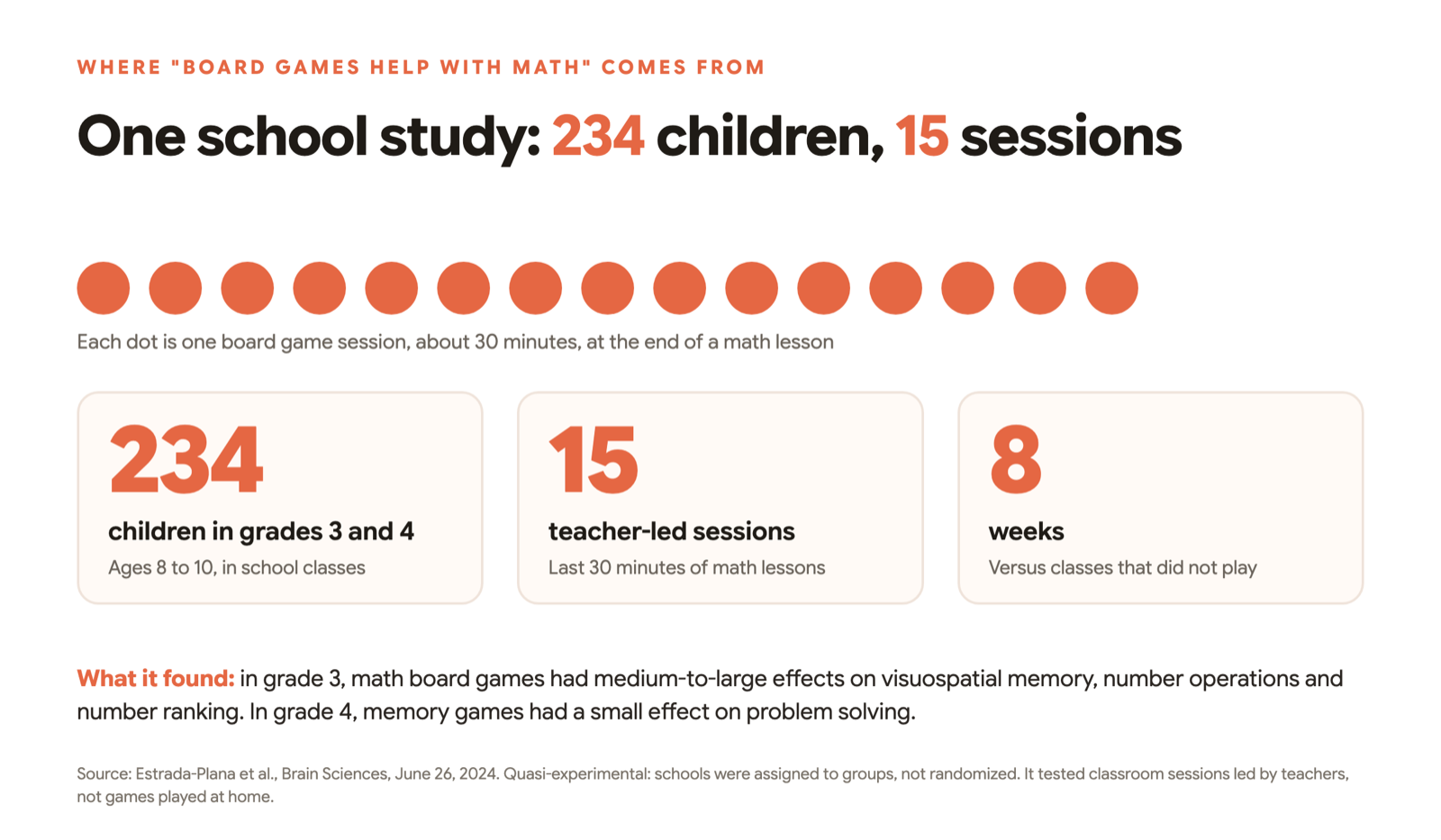
Because teachers ran every session in their own classrooms, the findings can’t automatically be applied to children playing games at home.
The schools were assigned to groups instead of being chosen at random, the teachers knew which group was which, and nobody tested games from a subscription box.
A 2026 review and meta-analysis in Applied Psychology: Health and Well-Being examined 24 studies on board games and executive functions. These are mental skills that help us plan ahead, remember instructions and control impulses.
The review found effects on children’s verbal short-term memory, which is the ability to remember words and sounds for a short period.
Although the researchers described the findings as promising, they also said the evidence was “not yet sufficient to support a strong recommendation.”
Much like flashcards, board games give children another way to practice what they’ve learned during their lessons. Cat Timms also explains how homeschooling families can use games alongside their existing curriculum.
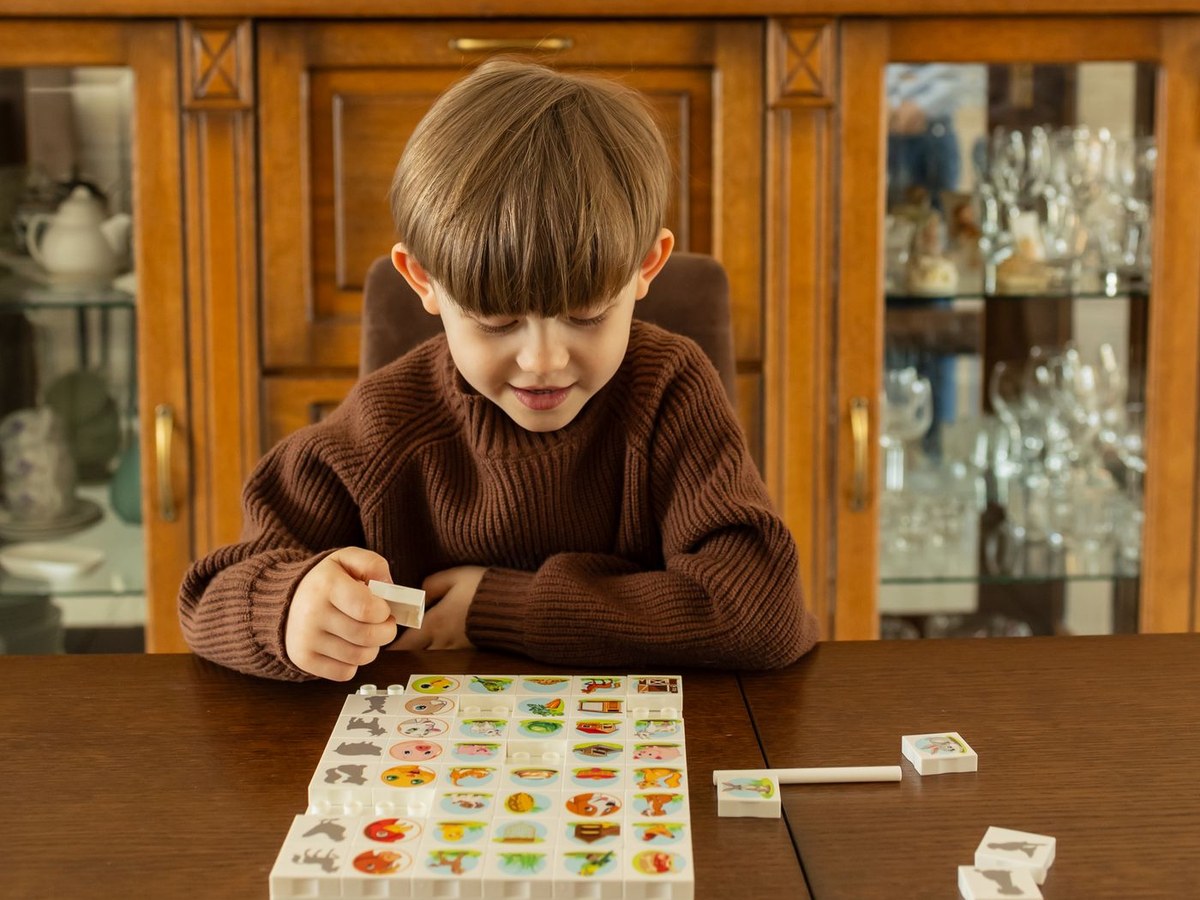
Games That Work for Short Homeschool Sessions
If you’re squeezing a board game between homeschool lessons, consider how much time you have and how many children will be playing.
Allow some extra time to explain the rules, too. A 15-minute game can easily turn into a 25-minute activity if everyone’s learning how to play.
The table below compares four games for homeschooling families, covering recommended ages, player counts, playing times and how each game works.
Tangram City and Pack the Essentials are currently available in the UnboxBoardom shop. Pack the Essentials is also among the November 2026 subscription choices. Magic Maze and Wits & Wagers are games we’ve featured in the past.
| Game | Player count | Time | Ages | What the game asks of you |
|---|---|---|---|---|
| Magic Maze | 1 to 8 | 15 min | 8+ | Work together in near silence to move heroes through a mall before a sand timer runs out |
| Tangram City | 1 to 5 | 10 to 40 min | 8+ | Place tiles at the same time to build the largest rectangle you can |
| Wits & Wagers | 3 to 7 | 25 min | 10+ | Answer number questions with a guess, then bet on whichever guess is closest |
| Pack the Essentials | 1 to 4 | 20 to 30 min | 12+ | Draft tiles to fill a suitcase with items and cats, with a solo option |
Each of these educational puzzles and games gives children a chance to practice something different. Tangram City, for instance, encourages spatial reasoning as players figure out how to fit differently shaped tiles together.
Wits & Wagers gives children practice estimating numbers, even when they don’t know the exact answer. Pack the Essentials encourages them to think ahead as they figure out how to fit everything into a suitcase.
Magic Maze takes a different approach. It’s a cooperative game in which players must work together without talking for most of the round. Homeschooling parents might appreciate those few minutes of silence!
Finding a game that younger and older siblings can enjoy together isn’t always easy. The games in the table are recommended for ages 8 and up, with some starting at 12, so families with younger children may need to explore other options.
Tangram City keeps everyone involved by allowing players to place their tiles simultaneously, rather than waiting for their turn. Pack the Essentials, on the other hand, offers a solo option for older children who want to play independently.
As children get older, they may also enjoy some of the board games for adults, giving parents and teenagers more opportunities to play together.
Homeschool blogger Tyla Beane suggests letting older siblings teach younger ones how to play. It gives older children practice explaining instructions while helping their siblings learn.
You don’t necessarily have to set aside an entire afternoon for board games. A short round after a lesson can help children practice what they’ve just learned. You could also use games as a brain break between subjects or make a weekly game day part of your homeschool routine.
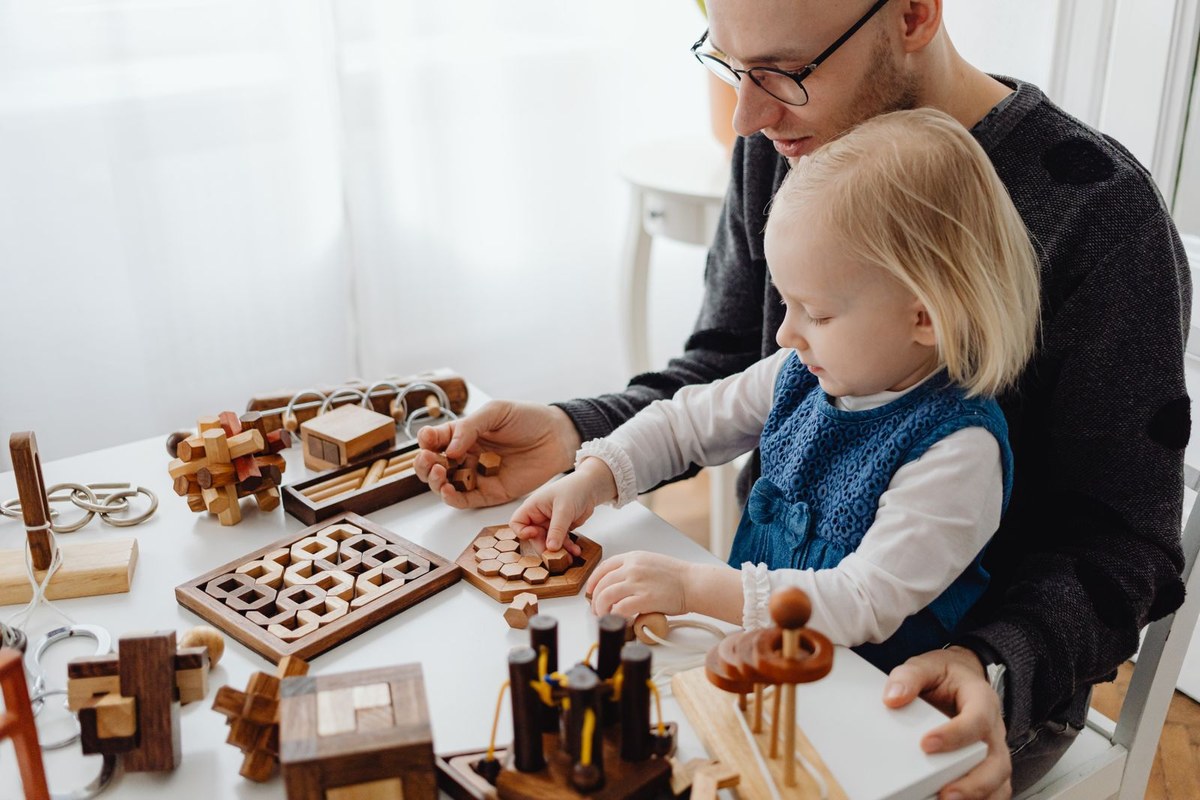
Do You Have to Subscribe, or Can You Just Buy One?
You don’t have to subscribe right away. If you’re still figuring out what kinds of board games your children enjoy, buying one game at a time is a good place to start.
Some previously featured games are available individually in UnboxBoardom’s shop for $33.99, plus a flat $6 shipping fee within the continental U.S. The selection changes periodically.
A board game subscription costs between $29.99 and $33.99 per box, depending on the plan, plus a flat $6 shipping per box. At $33.99, the pay-as-you-go option costs the same as buying an individual game.
The advantage for homeschooling parents is that someone has already done some of the research for them. That’s one less thing to squeeze into a busy homeschool week.
On the 1st of each delivery month, you’ll receive an email with descriptions of 3 hand-picked games. You have 5 days to make your choice, as explained on the Selecting Games page. If you’d rather leave the decision to the team, select Trust the Experts when signing up.
If none of the games appeals to your family, you can push your subscription back a month. Just contact the team before the selection deadline.
Boxes ship monthly, bi-monthly (every 2 months) or quarterly. That’s 12, 6 or 4 games a year, respectively. A quarterly subscription gives your children more time to explore each game before the next one arrives.
Every game is yours to keep, so nothing needs to be returned if you cancel your subscription.
A board game subscription can also be a practical gift from grandparents or other relatives. The gift guide explains how it works.
With the pay-as-you-go plan you can cancel at any time, and neither pay-as-you-go nor prepaid plans have a cancellation fee. A prepaid plan will not be renewed if canceled before the end of its term.
How UnboxBoardom Gives Back Through Board Games
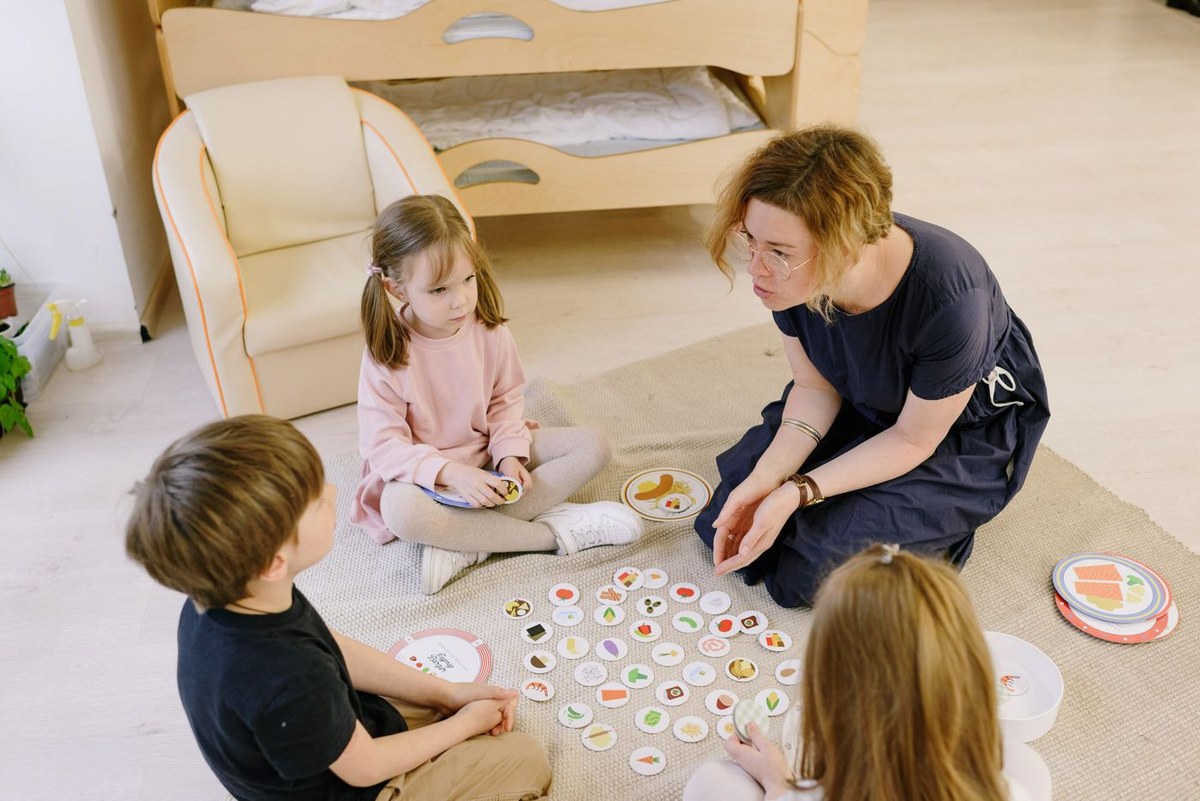
Not every child has access to board games at home. For every 10 new subscription signups, UnboxBoardom donates a board game to an organization that helps children who can’t afford their own.
Is It Worth It for a Homeschooling Family?
How often do your children play board games? If games regularly feature in your homeschool routine, a board game subscription may be worth considering. Of course, it also depends on your homeschooling budget and what your children enjoy playing.
According to NHERI’s fast facts page, homeschool families spend an average of $600 per student each year on education.
While you may need separate workbooks for each child, educational board games can often be shared among siblings. A subscription is also priced per box rather than per child, which is worth keeping in mind when planning your family’s budget.
On the annual prepay, monthly boxes come to 12 games at $29.99 each. That’s around $360 a year, or around $432 once you add the flat $6 shipping on each box. Quarterly boxes on the annual prepay are 4 games at $31.99 each, around $128 a year, or around $152 with shipping.
Either way, that covers the games alone, and it sits next to your curriculum and supplies instead of replacing them.
The games don’t have to be put away once the school day ends. Three of the four titles in the table above support two players, so parents can enjoy them too. You’ll find more two-player options on our board games for couples page.
UnboxBoardom’s team hand-picks fun, well-rated games that typically take 20 to 60 minutes to play. They’re not specifically chosen to match school subjects.
If you’re teaching fractions, for instance, you might be better off buying a game that focuses on fractions. But if you’re looking for a variety of games to play between lessons or during family game night, a subscription gives you more room to experiment.
What about screen time?
Between online lessons, educational videos and entertainment, children can spend a fair amount of their day looking at screens.
The World Health Organization’s 2020 guidelines recommend that children and teenagers spend less time sitting, particularly when using screens for entertainment. It’s a strong recommendation, although the supporting evidence is limited. The WHO doesn’t specify an exact number of hours because there wasn’t enough evidence to establish a limit.
While board games are generally a seated activity, they give children a chance to take a break from screens and interact with others face-to-face.
Not every learning opportunity needs a lesson plan. Sometimes, you can put the textbooks aside, open a board game and see where the next 30 minutes take you.
If you’ve been curious about introducing more games into your homeschool routine, now might be a good time to try an UnboxBoardom subscription. New subscribers can get 50% off their first box with code BOX50 through November 30, 2026.
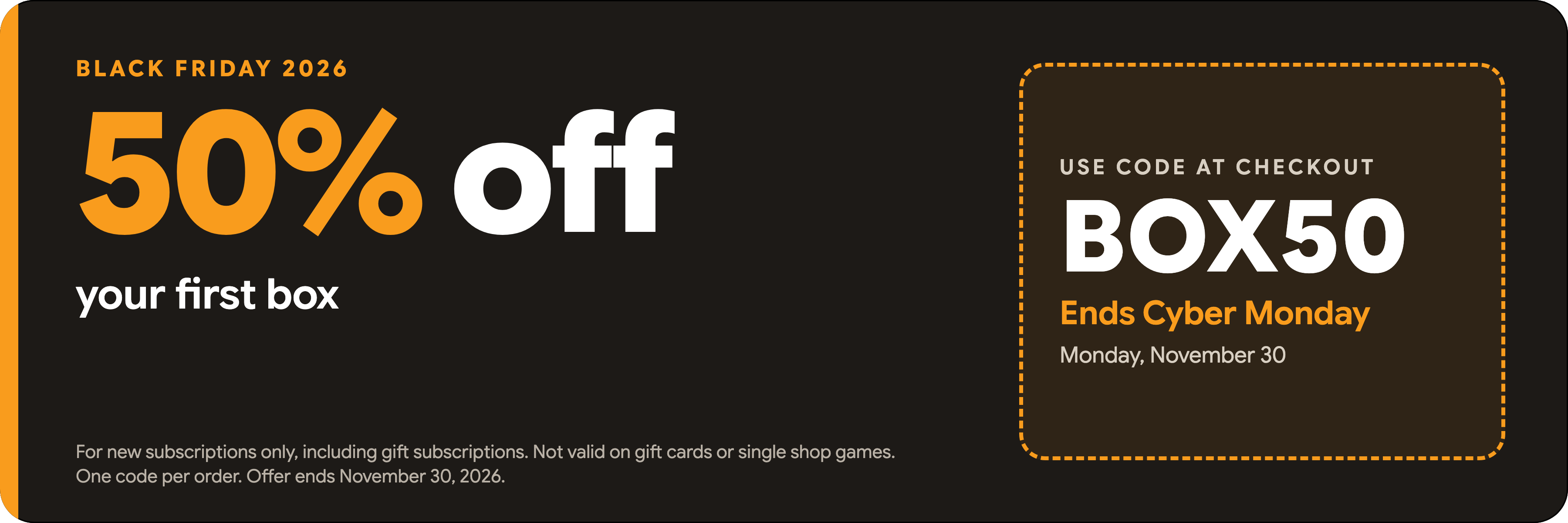
The offer applies to new subscriptions, including gift subscriptions. It excludes gift cards and individual games from the shop. Only one discount code can be used per order.
Missed the Black Friday offer? Starting December 1, 2026, new subscribers can still get 20% off their first box with code BLOGGAME20.
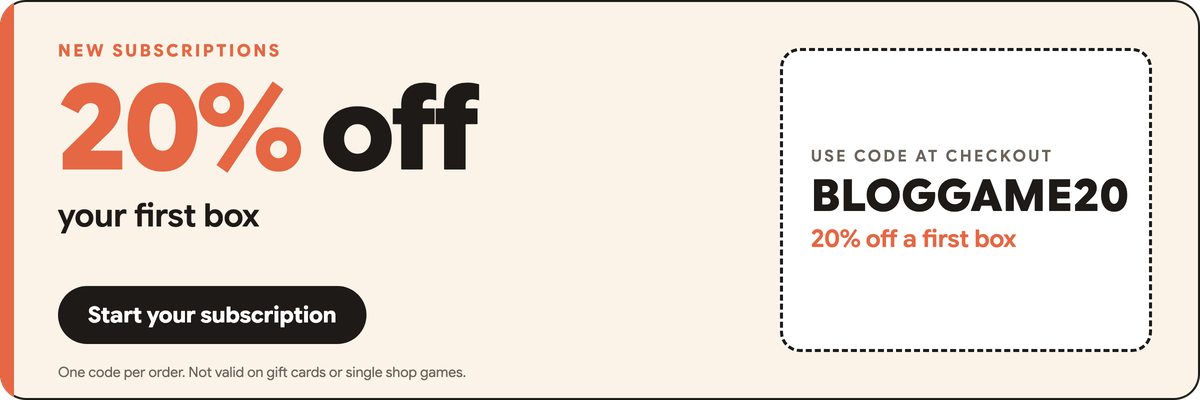
Keep in mind that orders placed by November 30 are expected to ship around December 15, while December orders will ship in January.
If you’re ordering a holiday gift and need it by a particular date, check with [email protected] before placing your order.
Not sure what to get a homeschooling family? A gift subscription lets the parents choose games their children will enjoy. Gift subscriptions don’t renew automatically unless the giver turns that on at checkout, and the recipient is never charged.
Besides, how often do kids ask for another round of math homework? : )
Frequently asked questions
Can a board game subscription replace a homeschool curriculum?
No. A board game subscription works best as a supplement. Games give children another way to practice skills from their lessons, much like flashcards, but no study has shown that game boxes improve school grades.
Do educational board games actually help kids learn?
Some do, in specific ways. In a 2024 school study of 234 children ages 8 to 10, third graders who played math games for 15 sessions did better than a control group at number operations and visuospatial memory. Those results came from teacher-led classroom play, so they don’t automatically carry over to games played at home.
How long do the games take to play?
UnboxBoardom’s team looks for games that usually take 20 to 60 minutes. Magic Maze is listed at 15 minutes and Tangram City at 10 to 40, which suit a short school block. Allow a little extra time for the first play while everyone gets familiar with the rules.
What ages are the games for?
The games are rated for ages 8 and up on average, but each game has its own recommended minimum age. Tangram City is for ages 8 and up and Pack the Essentials is for ages 12 and up, so check the listing for the youngest child at your table before you choose.
Is a subscription better than buying one game?
A direct purchase suits you if you already know which game you want. A subscription suits you if you’d rather have someone shortlist new games and send them on a schedule you choose. On the pay-as-you-go plan you can cancel at any time, with no cancellation fee.
How much does a board game subscription cost for a homeschooling family?
A box costs $29.99 to $33.99 depending on the plan, plus a flat $6 shipping within the continental U.S. NHERI reports an average of $600 per student per year on homeschool education, though that figure is per student and a subscription is priced per box. Families keep the games, and siblings can share them whenever the recommended ages and player counts suit everyone.
Can a board game subscription cut down on screen time?
A game gives children something to do away from a screen, but a subscription alone doesn’t guarantee a change in screen habits. The World Health Organization’s 2020 guidelines recommend limiting recreational screen time for ages 5 to 17 and don’t set a precise number of hours.
Why did Phil Jacobs start UnboxBoardom?
Phil Jacobs started UnboxBoardom after his wife couldn’t find the board-game-of-the-month gift she was looking for, so he created the service himself. More than 50,000 boxes have shipped since.

